Cedar Double Gate and Fence Built to Last
There's a real difference between a fence built to look good in photos and one built to actually hold up. The wood matters. The framing matters. The hardware matters. When you cut corners on any of those, it shows - and it fails faster than it should.
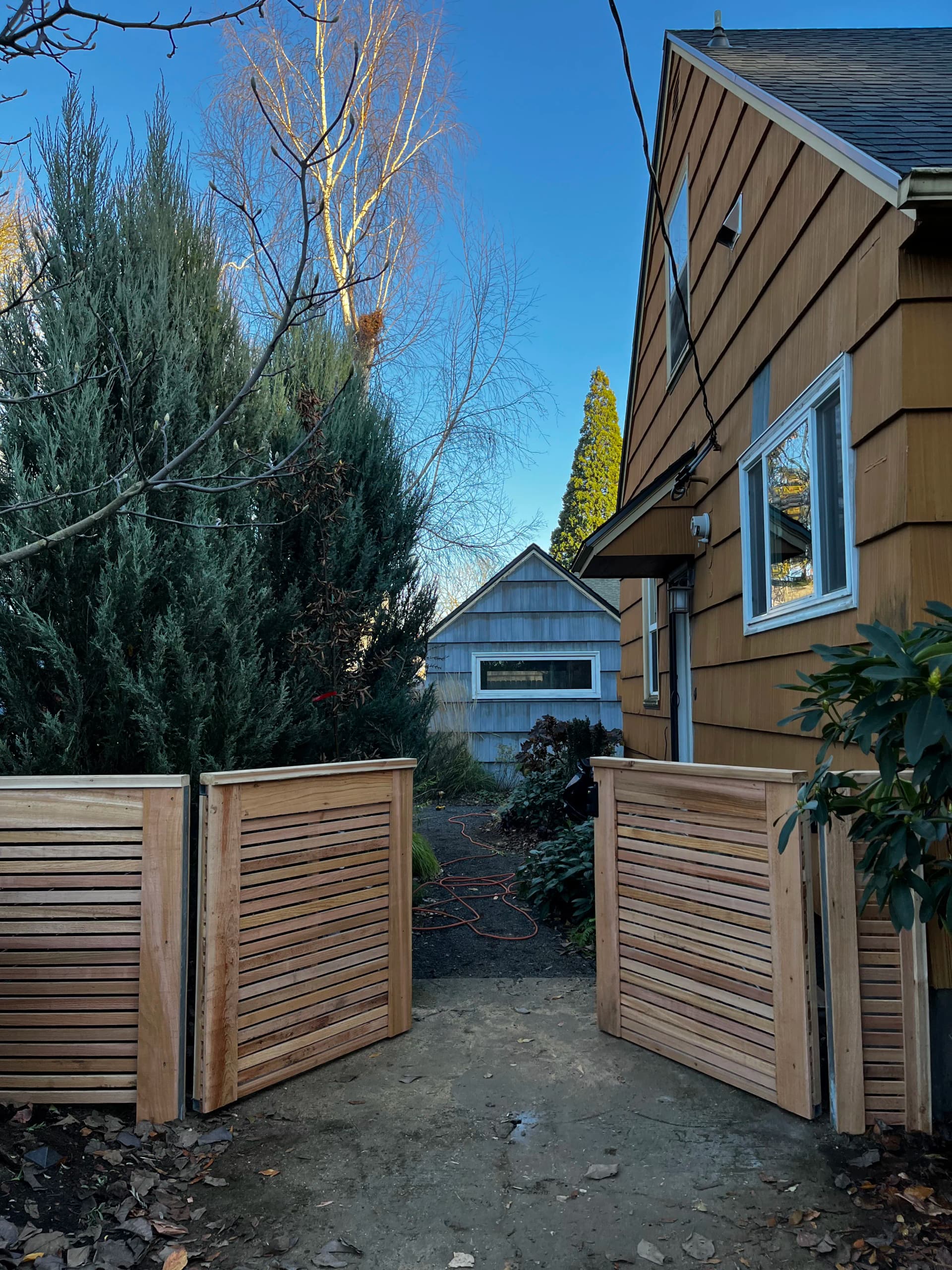
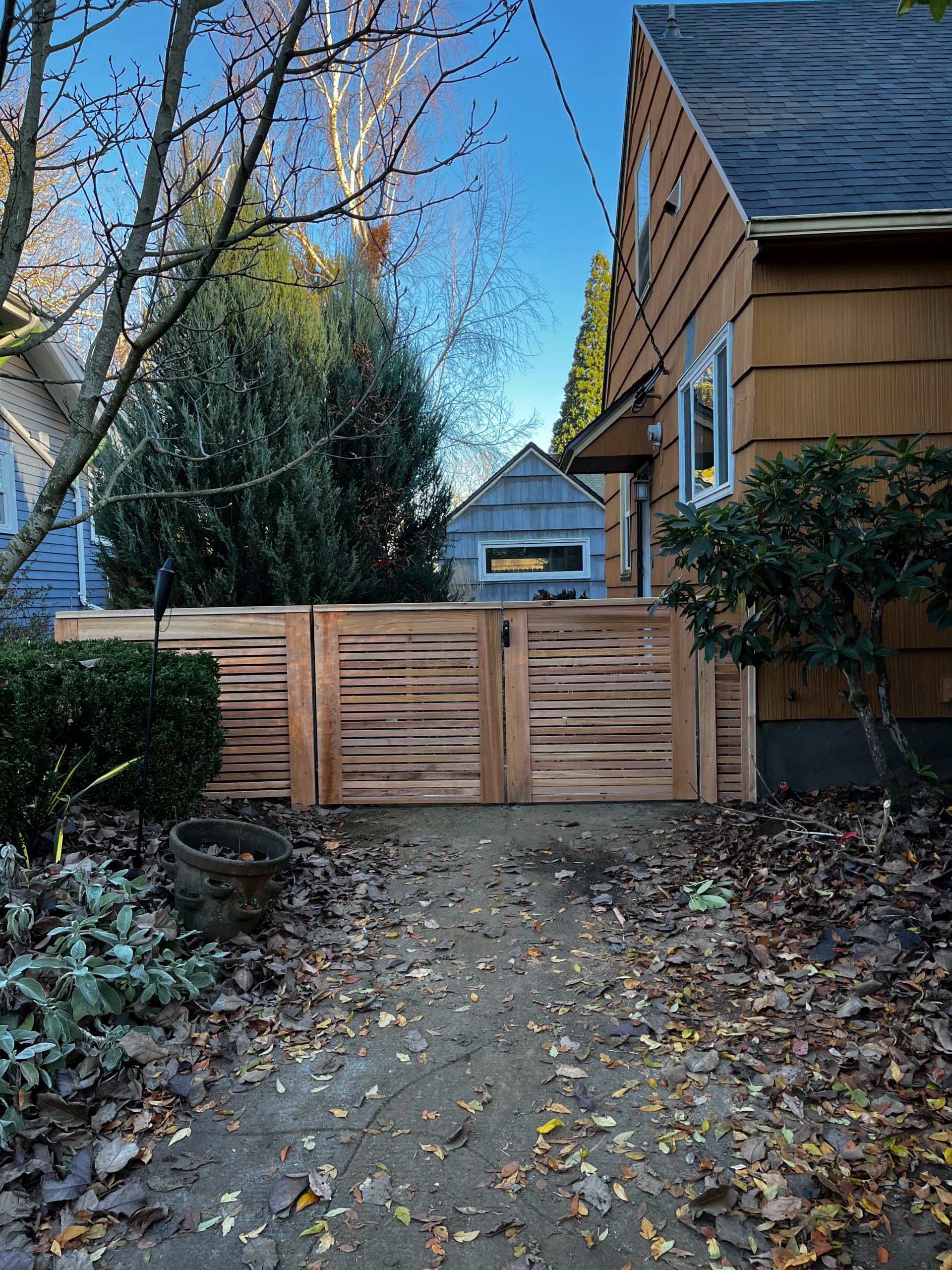
This is a cedar fence and double gate setup we put together for a residential property. The homeowner wanted something that felt solid, looked clean, and gave them real privacy without looking like a bunker. Horizontal cedar slats were the right call here. They give the whole thing a modern, finished look while still letting some light filter through between the boards.
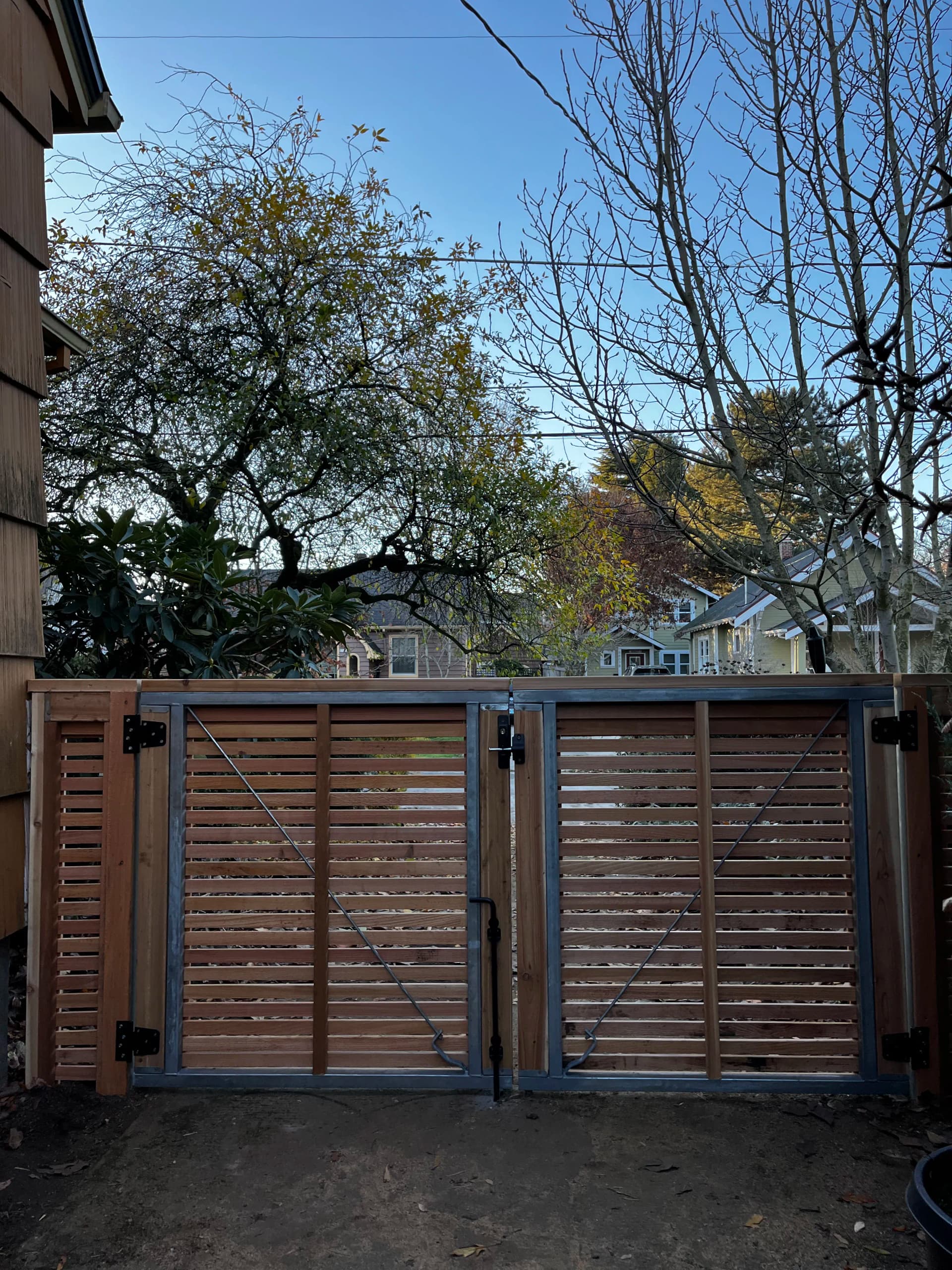
The double gate is where we really spent time on the details. We used a steel frame behind the cedar to keep those panels from sagging or warping over time. That's the part most people don't think about until their gate starts drooping six months in. The diagonal cable bracing you can see on the back side of the gate panels - that's structural. It keeps everything square and true, especially on a double-door setup like this where both panels need to meet cleanly in the center.
Cedar is genuinely one of the best materials for outdoor fencing. It's naturally resistant to rot and insects. It ages well. And fresh-cut cedar has that warm, honey tone that looks sharp against almost any home exterior. Pair it with quality hardware and proper framing, and you've got a fence that holds up for years with minimal maintenance.
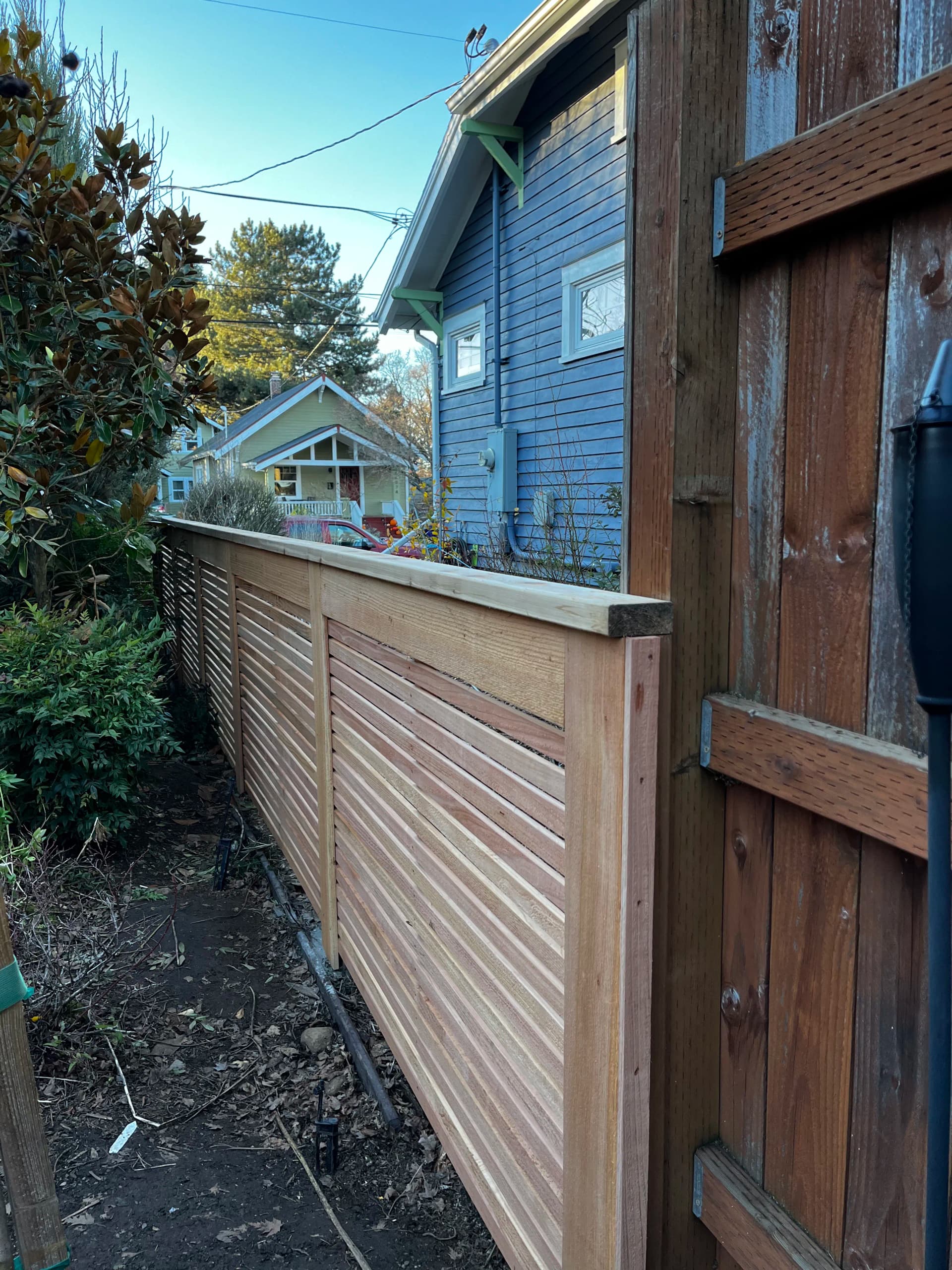
The fence section running along the side of the property ties everything together - same horizontal pattern, same clean cedar finish. It all reads as one cohesive build, not a mix of materials or styles that were pieced together over time. That kind of consistency is what separates a great installation from one that just gets the job done.